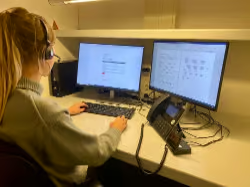
AI-driven process optimization in hospitals uses data analytics and machine learning to streamline workflows, reduce inefficiencies, and enhance patient care. For example, predictive models can forecast patient no-shows to improve scheduling and resource allocation, while automated algorithms can calculate clinical scores, such as for urticaria, quickly and consistently. These tools help hospitals operate more efficiently while maintaining high-quality care.
Reducing missed appointments (no-shows) by proactively calling patients with a higher risk profile to remind them of their appointment.
No-shows are a significant issue at UMC Utrecht: they lead to missed care opportunities for patients and added pressure on the healthcare system. Inspired by a similar initiative at Erasmus MC, an AI model was developed to estimate the likelihood of no-shows.
The model uses various data points: appointment details (such as the number of previously scheduled appointments), patient characteristics (such as age and travel distance to the hospital), behavior (such as previous no-shows and punctuality), and time factors (like the day of the week and time of day).
The underlying algorithm is a HistGradientBoosting Classifier, and the entire code is open source on GitHub.
UMC Utrecht’s call center contacts patients with a high no-show risk three working days prior to their appointment to remind them. A randomized controlled trial demonstrated that this approach is effective, significantly reducing the number of no-shows.
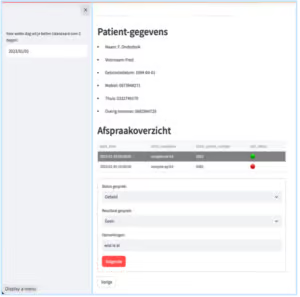
Screenshot of the dashboard used by the call center
Developers: Ruben Peters, Eric Wolters, Welmoed Tjepkema (AI for Health)
Commissioned by: Zorg van Morgen
Other stakeholders: UMC Utrecht outpatient clinics, UMC Utrecht Call Center
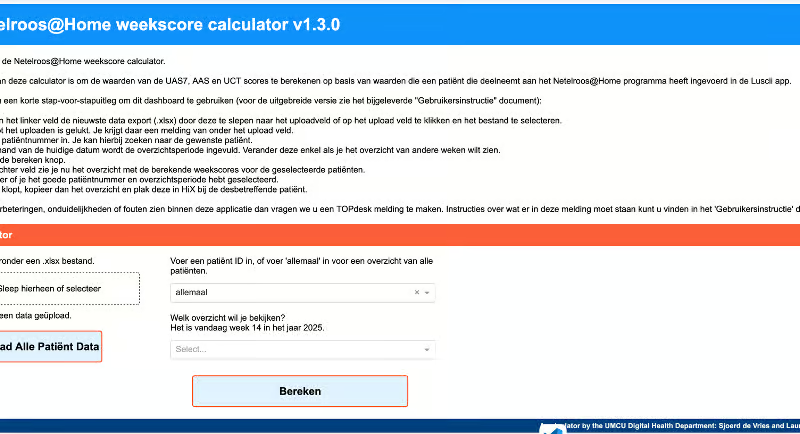
The goal of this calculator is to compute the UAS7, AAS, and UCT scores based on values entered by a patient participating in the Netelroos@Home program through the Luscii app.
This project focuses on calculating important scores for patients with chronic urticaria (hives). By automating this calculation process, we reduce workload, allowing for more patients to be included into the program.
Previously, these scores had to be calculated manually by students at the Medical Direction Center, which took hours every week, even for moderate numbers of patients. Using the Calculator tool, this calculation was completely automated. An export from the Luscii app was made weekly and used as input for the tool, after which the calculations were performed and the output could be copied into the EHR. This final step was further automated by Team Process Automation, to further streamline the process.
Current State
The calculator has been delivered and is used weekly to compute the relevant scores. This process has been further automated using Robotic Process Automation, eliminating the need for MRC students to manually copy the results into the EHR.
Developers: Sjoerd de Vries, Laura Veerhoek (AI for Health)
Dermatology: Heike (dermatologist), Petra (Nurse Specialist)
Other Stakeholders: Medical Direction Center, Team E-health, Team Process Automation